Your child can learn Mandarin, Japanese or Spanish.
Playful 45-minute classes with songs, games and stories, for up to 6 children, taught by a native speaker. Every language has two groups: Little Sprouts for ages 3 to 6 and Big Sprouts for ages 7 to 12.
- From $40 a class
- Up to 6 children
- Ages 3 to 12
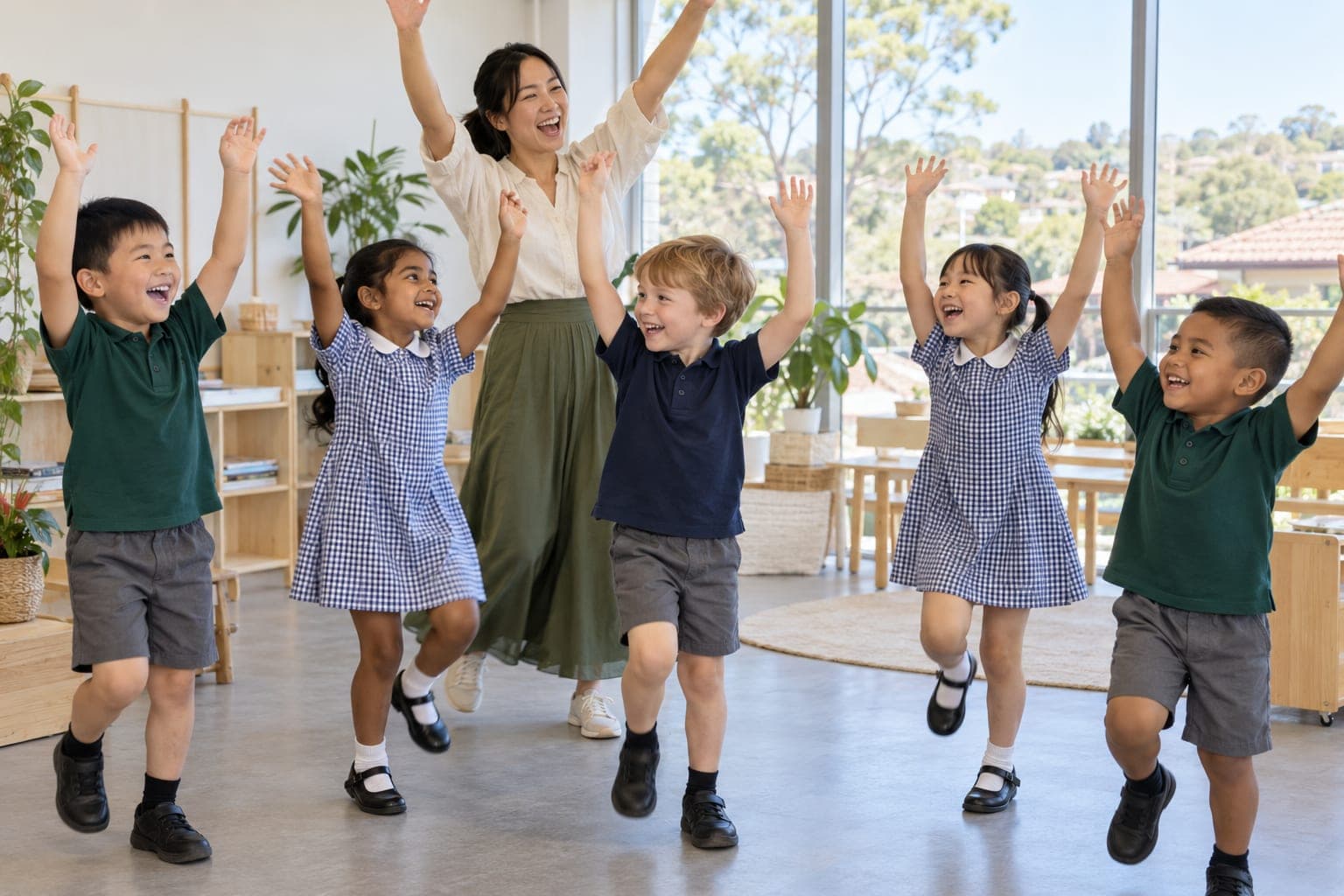
Every language has two age groups.So every class suits your child's age, and nobody feels left behind.
Ages 3 to 6
Little Sprouts
Listening, speaking and singing, with picture cards, games and lots of encouragement. Children don't need to read yet.
- 45-minute classes
- Up to 6 children
- No reading needed yet
- Songs
- Picture cards
- Games
Ages 7 to 12
Big Sprouts
More conversation and games, plus reading and writing in the language's own script.
- 45-minute classes
- Up to 6 children
- Reading and writing in the language's own script
- 你好
- こんにちは
- ¡Hola!
We place children by their age.
nǐ hǎo means hello
Mandarin 中文
A playful start: songs and games that make the four tones stick, then first characters with pinyin as a guide.
- Ages 3 to 6, and 7 to 12
- 45 minutes a class
- Up to 6 children
- From $40 a class
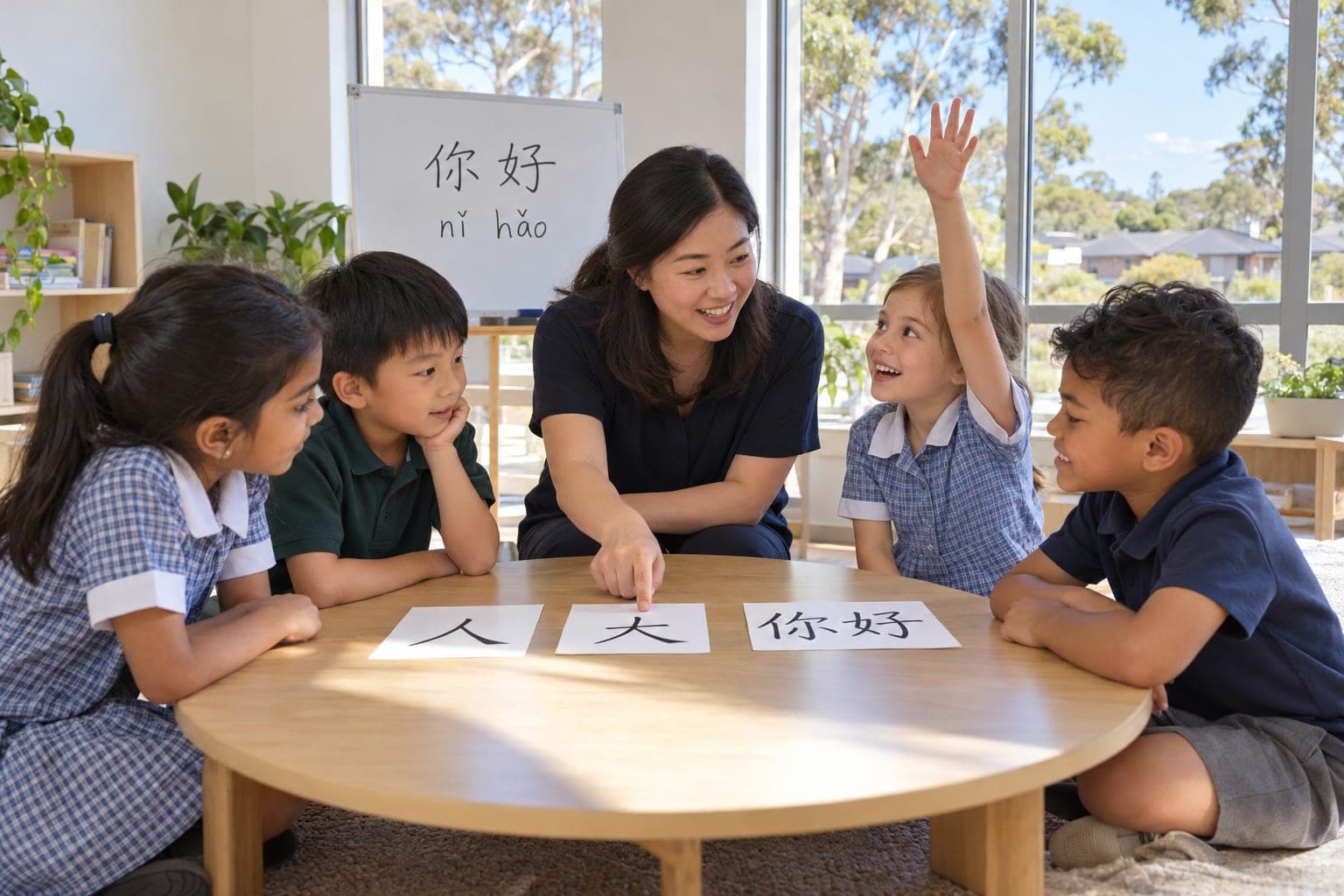
Here's what classes are like.
Mandarin is the most common language after English in Australian homes, so many children already hear it from family and friends. In class, children sing, play and chat their way in. Songs and hand actions help them hear and copy the four tones, and characters come in a few at a time, with pinyin as a guide. Every small step is celebrated.
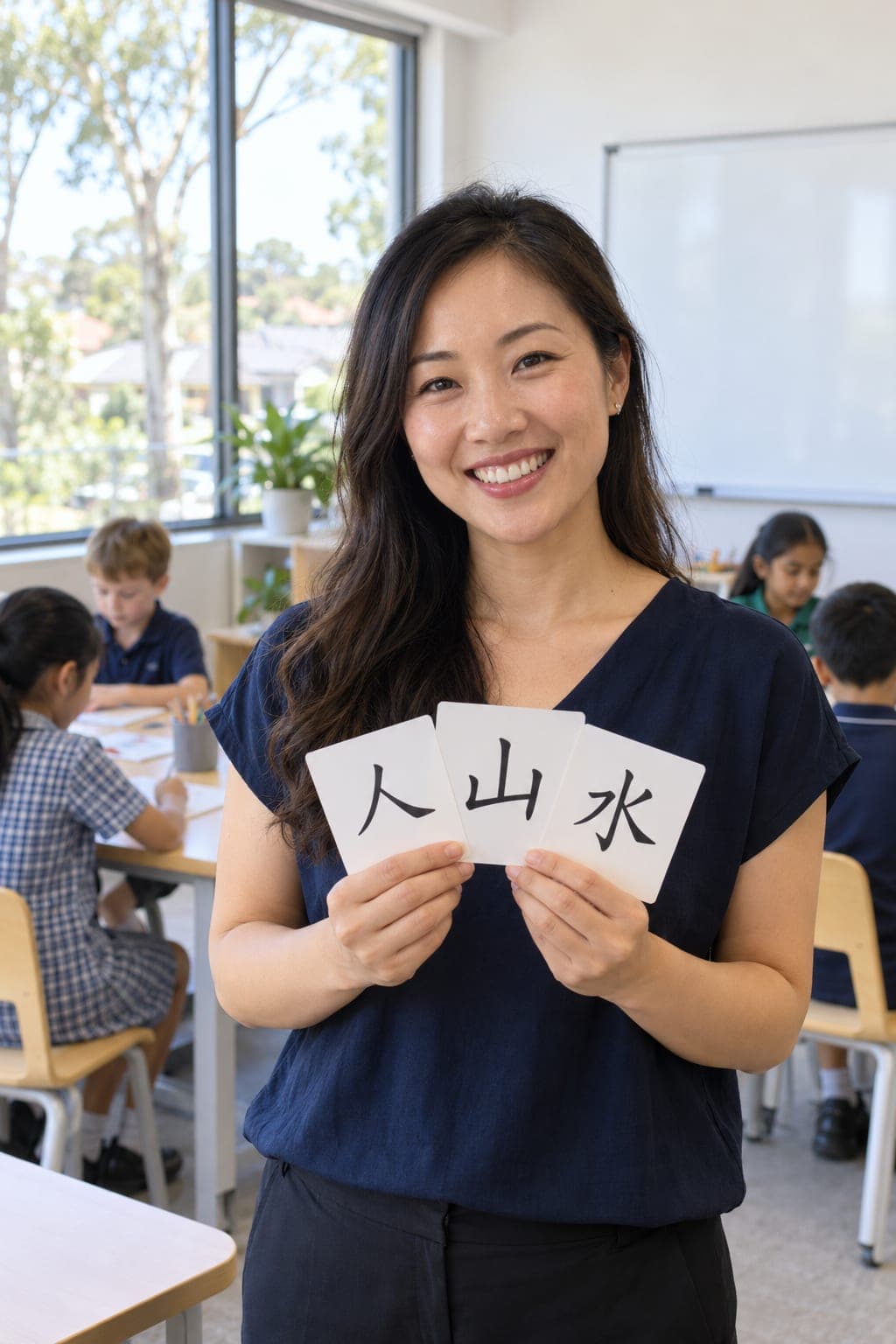
- 你好nǐ hǎohello
- 谢谢xièxiethank you
- 朋友péngyoufriend
- 猫māocat
- 红色hóngsèred
- 妈妈māmamum
Here's what your child will learn.
Little Sprouts, ages 3 to 6
- Greet people, say their name and age, and use please and thank you
- Count to 10, with the hand signs Chinese children use
- Name colours, animals, food and family members
- Hear and say the four tones, through songs and actions
- Recognise their first characters, like 人 (person), 大 (big) and 口 (mouth)
Big Sprouts, ages 7 to 12
- Talk about themselves, their family and school in short conversations
- Read and write common characters, with pinyin as a guide
- Tell the time, talk about food and shopping, and ask questions
- Read short stories aloud
This is how we teach it.
- Songs and rhymes that make the tones stick
- Picture cards, games and hand actions
- Character writing in squared practice books
- Festival days, like Lunar New Year and the Mid-Autumn Festival
We place home speakers in the right group.
Does your child understand Mandarin but answer in English? They're very welcome. Tell us when you enrol, and a teacher will check where they're at and place them in the group that suits them, so they're neither bored nor lost.
konnichiwa means hello
Japanese 日本語
Greetings, counting games and songs first, then hiragana, the very first script Japanese children learn.
- Ages 3 to 6, and 7 to 12
- 45 minutes a class
- Up to 6 children
- From $40 a class
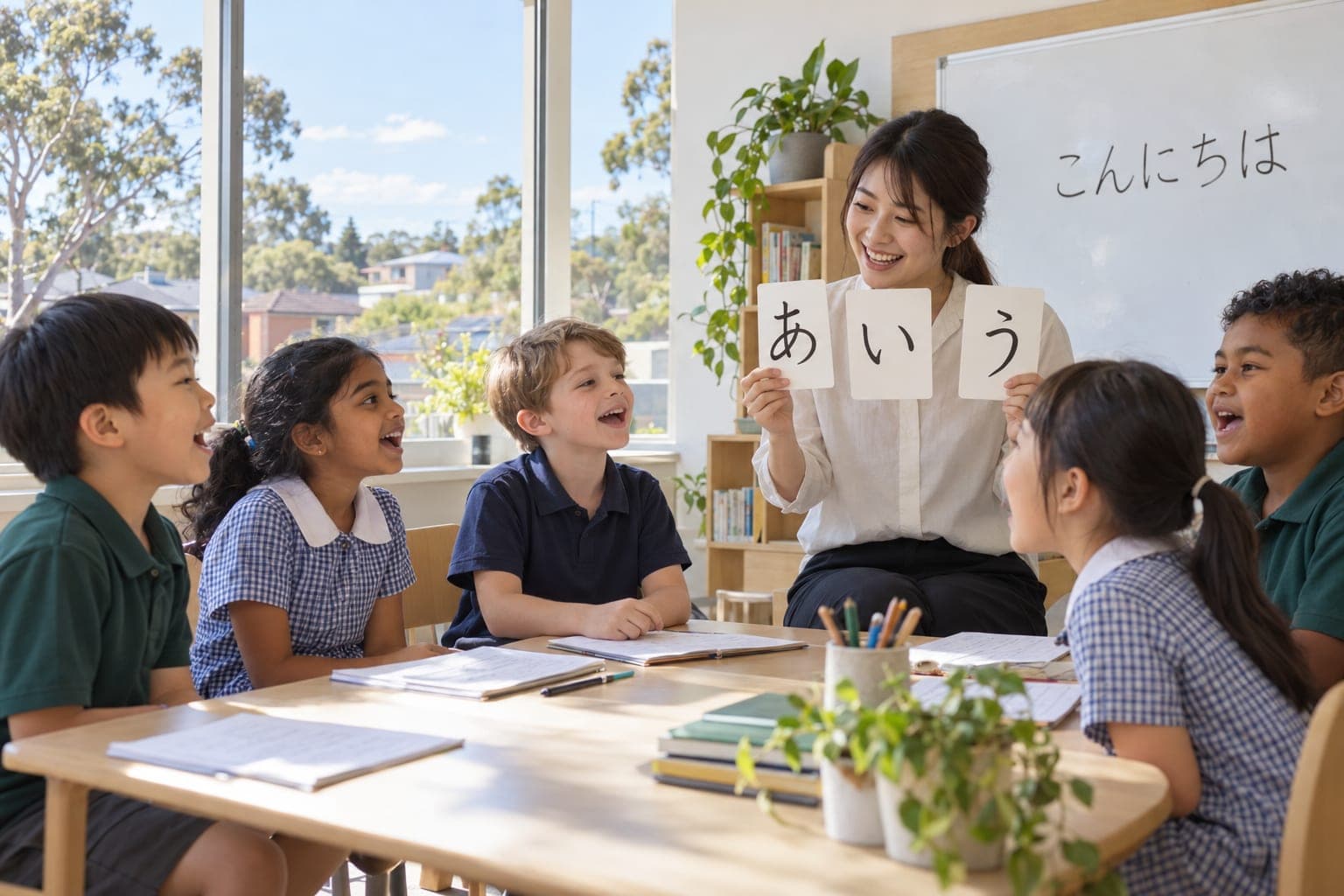
Here's what classes are like.
Japanese is easier to start than most parents expect. Its sounds are simple for English speakers to say, and hiragana, the first script Japanese children learn, has 46 characters. Little Sprouts speak and sing first. Big Sprouts learn to read and write hiragana and a few simple kanji, one gentle step at a time.
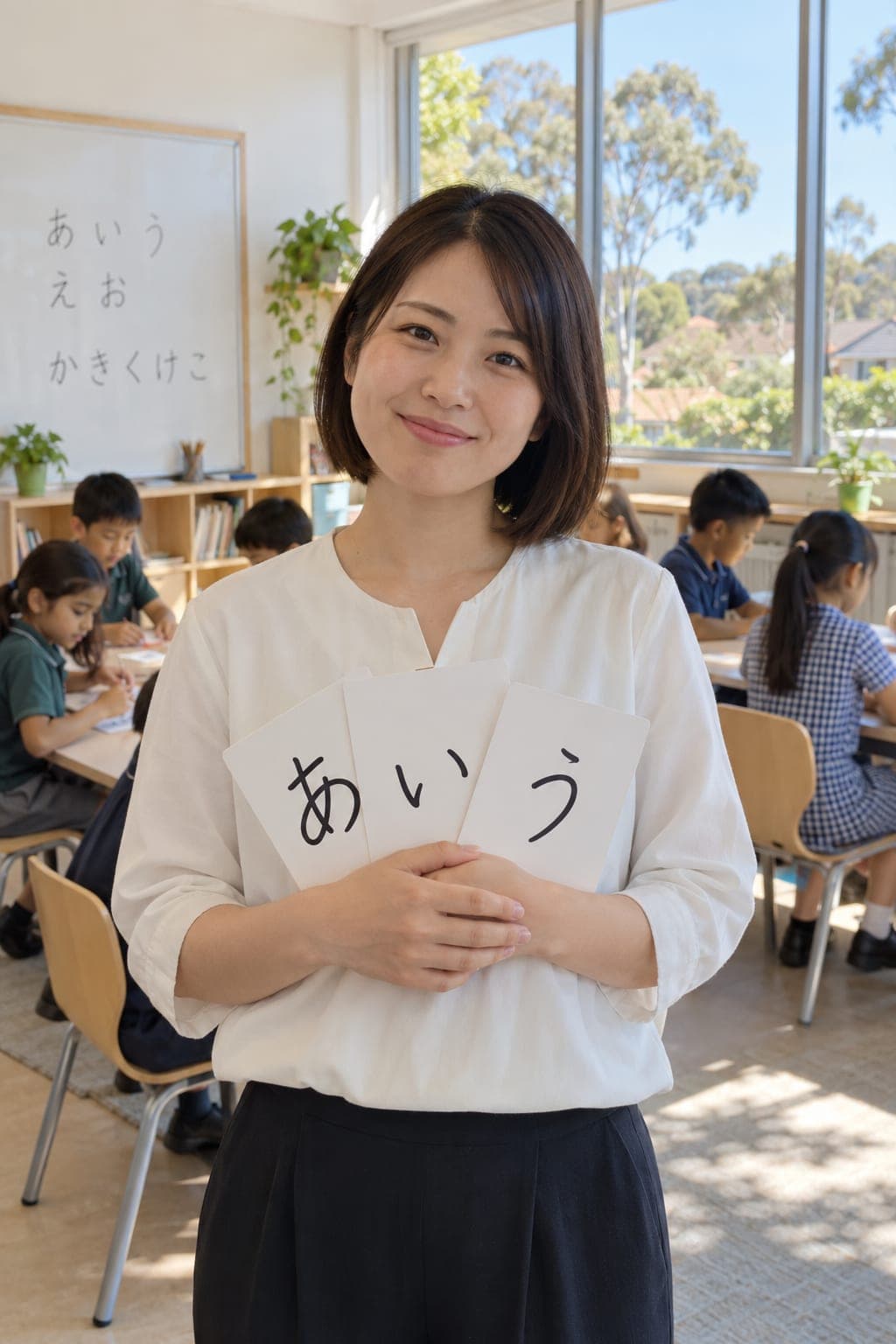
- こんにちはkonnichiwahello
- ありがとうarigatōthank you
- ともだちtomodachifriend
- ねこnekocat
- あかakared
- おいしいoishiiyummy
Here's what your child will learn.
Little Sprouts, ages 3 to 6
- Greet people, say their name and age, and use please and thank you
- Count to 10 and play counting games
- Name animals, colours, food and body parts through songs
- Recognise the hiragana in their own name
Big Sprouts, ages 7 to 12
- Read and write hiragana, starting with the characters in their own name
- Hold short conversations about likes, family and school
- Learn some katakana and simple kanji, like 日 (sun) and 山 (mountain)
- Learn about school life, food and festivals in Japan
This is how we teach it.
- Songs and action games
- Hiragana cards and matching games
- Writing practice in squared books
- Festival days, like Hinamatsuri in March
We place home speakers in the right group.
Already speaks some Japanese at home? Tell us when you enrol, and a teacher will place your child in the group that suits them best.
OH-lah means hello
Spanish Español
Stories, songs and pretend play from the very first class. Spanish is read the way it sounds, so children read aloud early.
- Ages 3 to 6, and 7 to 12
- 45 minutes a class
- Up to 6 children
- From $40 a class
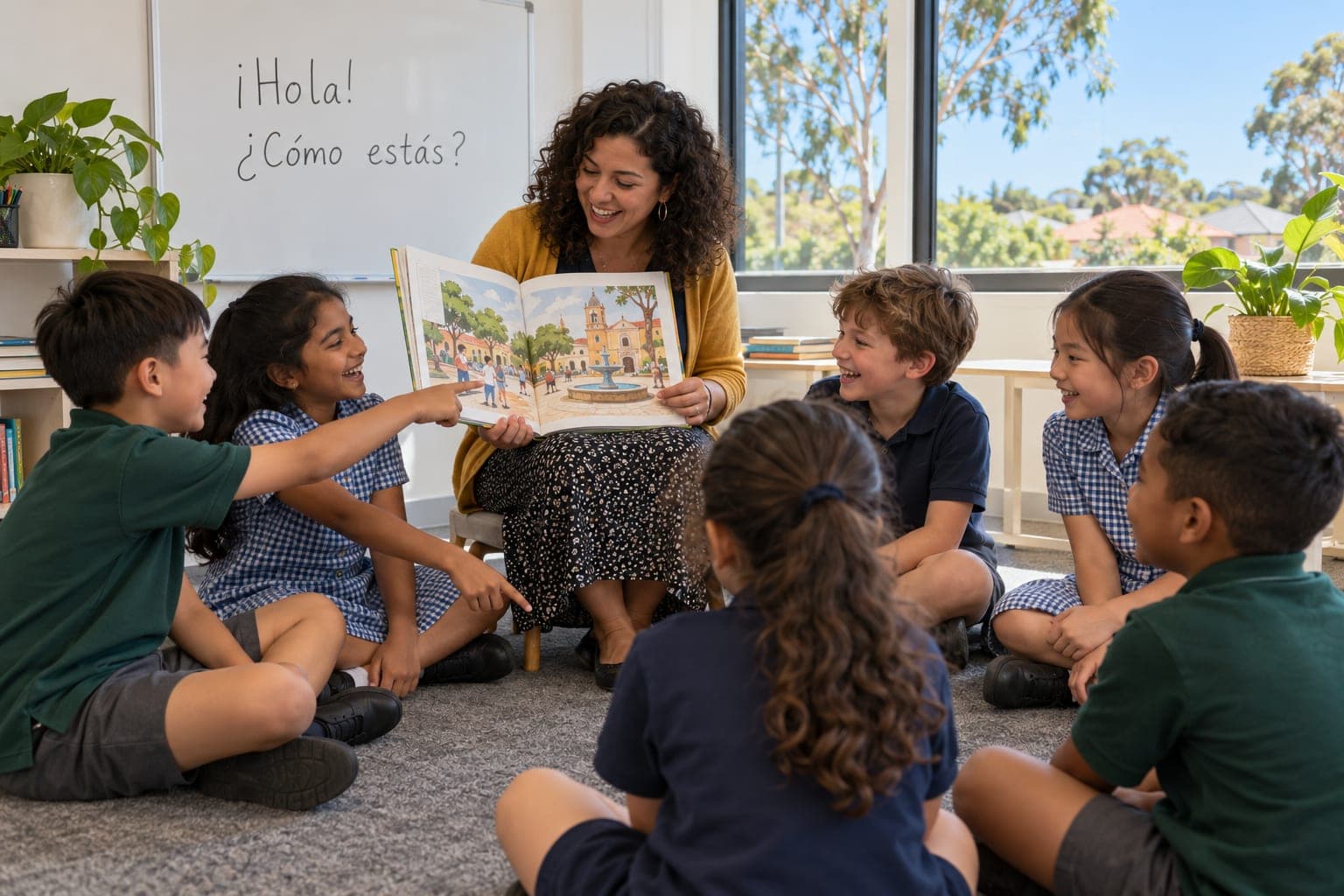
Here's what classes are like.
Spanish is spoken in more than 20 countries, and it's one of the friendliest languages for English-speaking children to start. It's written the way it sounds, so children can read aloud early. The teacher speaks Spanish for most of the class, with pictures, actions and lots of encouragement to make it clear.
- ¡Hola!OH-lahhello
- graciasGRAH-see-ahsthank you
- amigoah-MEE-gohfriend
- perroPEH-rrohdog
- rojoROH-hohred
- me gustameh GOOS-tahI like
Here's what your child will learn.
Little Sprouts, ages 3 to 6
- Greet people and say how they feel
- Count to 20 and name colours, animals and food
- Sing songs and join in with picture stories
- Follow simple instructions, like ¡levántate! (stand up) and ¡siéntate! (sit down)
Big Sprouts, ages 7 to 12
- Talk about themselves, their family, hobbies and the weather
- Read short texts aloud and write simple sentences
- Ask and answer questions in short conversations
- Learn about life and festivals in Spanish-speaking countries
This is how we teach it.
- Songs, rhymes and movement
- Picture books read aloud
- Role play, like a market stall or a café
- Festival days, like Carnaval in February
We place home speakers in the right group.
Already speaks some Spanish at home? Tell us when you enrol, and a teacher will place your child in the group that suits them best.
Our opening prices.The more classes a week, the less each class costs.
Every class is 45 minutes, with up to 6 children. Prices are per child.
1 class a week
One 45-minute lesson each week
$50
per class
- Usually $55 a class
- $50 a week
- Up to 6 children in every class
- Taught by a native speaker
2 classes a week
Two 45-minute lessons each week
$40
per class
- Usually $55 a class
- $80 a week
- Saves $30 a week on single classes
- Up to 6 children in every class
- Taught by a native speaker
- Recommended
3 classes a week
Three 45-minute lessons each week
$40
per class
- Usually $55 a class
- $120 a week
- Saves $45 a week on single classes
- Up to 6 children in every class
- Taught by a native speaker
Questions about learning a language.If yours isn't here, just ask us.
How big are the classes, and how long are they?
Every class is 45 minutes, with up to 6 children. That way every child gets several turns to speak in each lesson.
Which days are classes on?
When you enrol, you'll see which days still have spots. Pick the day that suits your family, and a time if one is shown. Days that are full have a waitlist, and we'll let you know if a spot opens up. We confirm your child's class time by email.
How many classes a week should my child do?
One class a week is a steady start. Two or three classes a week give your child more practice, and each class costs less. We recommend 3 classes a week.
My child is shy. Will they be put on the spot?
No. Teachers start with songs and answers the whole group says together, so nobody has to speak alone. Small groups make it easier for quiet children to join in when they're ready.
Will learning another language confuse my child?
No. Children who learn more than one language reach the same milestones as other children. Mixing words from two languages for a while is a normal part of learning, and it sorts itself out. That's the advice from Pregnancy, Birth and Baby, the Australian Government's parenting health service.
Will my child become fluent?
Being fluent takes years and lots of practice, so we won't promise that. What we can promise is steady progress: everyday words, songs and simple conversations, and for older children, reading and writing.
How much does it cost?
Our usual price is $55 a class. At our opening prices, 1 class a week is $50 a class, and 2 or 3 classes a week are $40 a class. Our recommended package, 3 classes a week, is $120 a week, $45 less than 3 single classes.
You can pay weekly, or for the whole school term, which we recommend because it secures your child's spot for the term. Spots are limited, so enrol now to get the opening prices.
Is there a discount?
Yes. Families who join us now pay our opening prices: $50 a class for 1 class a week, or $40 a class for 2 or 3 classes a week, instead of our usual $55 a class. It's our thank you for joining us early.
Spots are filling fast.Enrol now to ask for your child's spot.
Ask for a spot in our first classes. Each class takes up to 6 children, and every one of them is looked after.